
Key Takeaways
- Custom fabrication services in cutting, beveling, and profiling drastically reduce manufacturing downtime, directly benefiting industries that rely on swift project turnaround and prompt equipment restoration.
- Automation and advanced technology maximize precision, minimize errors, and enhance overall productivity, enabling businesses to meet stringent industry standards even as project complexity increases.
- Businesses gain flexibility, improved weld integrity, and the ability to handle intricate geometries in metalwork through custom fabrication. This strategy empowers organizations to adapt quickly to changing project demands and specifications.
- Faster turnaround directly translates to reduced project costs and improved competitiveness, supporting long-term growth and helping companies secure more contracts by demonstrating reliability and responsiveness.
Understanding Custom Fabrication
Modern manufacturing environments operate under constant pressure to optimize productivity and realize efficiencies across every phase of the workflow. Every hour lost to downtime means increased costs, missed delivery targets, and diminished competitiveness—a scenario most companies seek to avoid at all costs. To address these challenges head-on, leading manufacturers and fabricators have steadily shifted to custom fabrication strategies, especially for complex or high-stakes infrastructure projects. Specialized services, such as those provided by an industrial piping company Tulsa OK, rely on advanced processes that integrate skilled craftsmen with modern equipment to deliver bespoke metal solutions tailored to precise client and project needs. This approach is a significant departure from older, off-the-shelf parts, which often require on-site modifications, delay installations, and can introduce unexpected compatibility problems.
Unlike one-size-fits-all or mass-produced generic components, custom fabrication offers unmatched flexibility and accuracy. Processes such as high-tolerance cutting, detailed beveling, and intricate profiling are coordinated using state-of-the-art machinery capable of achieving minute tolerances and producing identical parts in rapid succession. This adaptability enables companies to meet unique project specifications, addressing both functional and regulatory requirements specific to each application. By ensuring that each part aligns seamlessly with a project’s original design blueprints, custom fabrication dramatically reduces the instances of last-minute rework. This, in turn, shortens project timelines while safeguarding against costly mistakes that might emerge during installation or in the field. Ultimately, embracing a customized approach helps companies ensure not just speed but also a higher standard of quality and reliability—a foundation for delivering projects on time and within budget.
The Role of Cutting in Custom Fabrication
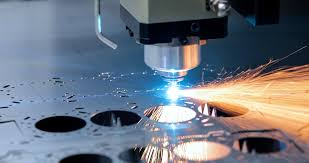
At the heart of every successful fabrication project lies the essential, foundational step of cutting, which involves transforming sheets, bars, or tubes of raw metal into usable parts with the exact shapes and dimensions dictated by the design. Precision in this phase is critical; even minor measurement errors can ripple throughout the assembly, causing delays and driving up labor costs. The introduction and early adoption of advanced technologies such as Computer Numerical Control (CNC) systems paired with laser, plasma, and oxy-fuel cutting have utterly transformed the landscape of modern metalworking. These methods deliver remarkably exact tolerances and dramatically improved cutting speed compared to traditional manual methods, nearly eliminating the guesswork and material waste previously common in fabrication shops.
For instance, CNC plate cutting, which works directly from digital blueprints, allows manufacturers to automatically cut large volumes of parts, ensuring each piece meets the required dimensions exactly every time. According to Machine Design, CNC-driven cutting solutions have not only reduced human error but have also exponentially improved repeatability—delivering consistent, reliable results alongside rapid job turnaround. This leap in capability enables fabrication teams to push projects through the shop floor faster than ever before with manual processes, freeing skilled labor for more specialized tasks and allowing the handling of particularly intricate or high-stakes parts with confidence.
Beveling: Preparing for Stronger Welds
Beveling, or the creation of clean, angled edges along metal parts, is a crucial process in fabrication where strong, lasting welds are paramount. The creation of precise bevels increases the surface area available for joining, leading to welds that are not only robust but also able to withstand significant operational stress, vibrations, and pressure fluctuations over time. Historically, bevelingwas performed manually with hand tools or grinders, a slow, inconsistent process that relied heavily on the operator’s skill. This inevitably resulted in varied edge quality, more frequent rework, or even occasional catastrophic weld failures down the road if imperfections went unnoticed.
The arrival of automated beveling machines marked a turning point for the industry. These highly engineered tools now enable fabricators to create consistently uniform, ready-to-weld edges at speeds and with accuracies that manual operations cannot match. As noted by Assembly Magazine, automated beveling eliminates the need for excessive manual grinding, reduces the risk of human error, and dramatically slashes processing time—ensuring productivity gains without compromising weld integrity. By delivering perfect edges every time, these machines help maintain weld strength across all joints, ultimately improving project durability and safety.

Profiling: Achieving Complex Shapes
Profiling is where fabrication truly demonstrates its capacity for innovation and agility, opening up possibilities for designs that would be impossible or prohibitively expensive to create with traditional methods. Profiling refers to the ability to cut, sculpt, and refine metal pieces into complex shapes or elaborate geometries—capabilities that are increasingly critical as industries push for greater customization and tighter part fitment. Modern techniques, such as 3D tube laser cutting, essentially turn digital design models into functional components with a degree of precision and repeatability that was previously unattainable.
Leveraging these technologies, fabricators can now produce highly intricate features that, if done by hand, could consume hours of skilled labor and risk introducing errors. With the advent of automated profiling, even the most complex cuts are executed in minutes, resulting in parts that assemble seamlessly with minimal adjustment or rework. This level of precision has a ripple effect throughout the manufacturing process: tight fit-ups reduce assembly effort, prevent alignment issues during installation, and enable clients to tackle ambitious projects without the delays or compromises that complex geometries once entailed.
Time Savings Through Automation
When automation is integrated into the fabrication process, its benefits go far beyond simply shifting the workload from the operator to specialized machines. Automation has a transformative impact, exponentially increasing throughput, lowering the risk of mistakes, and providing a foundation for continuous, round-the-clock production. Automated cutting and beveling equipment can work at high speeds and with little to no interruption, greatly enhancing a business’s ability to meet aggressive deadlines and rapidly shifting project scopes.
Consider, for example, automation systems like the TruLaser Series 3000 Bevel Cut Edition. This equipment is designed for precisely what today’s manufacturing sector requires: it can automatically cut and bevel intricate contours in steel with no operator intervention, preparing weld-ready components directly from raw material stock. This end-to-end automation reduces material-handling requirements, minimizes wait times between process steps, and shortens overall project timelines. By streamlining every stage of component preparation, businesses can recover lost hours and even days, translating those gains into faster deliveries and better profit margins.
Reducing Downtime with Custom Fabrication
One of the most immediate and measurable benefits of investing in advanced custom fabrication technologies is the sharp reduction in unexpected downtime. By digitizing and automating critical steps such as cutting, beveling, and profiling, manufacturers ensure parts are built right the first time, minimizing the risk of errors that require expensive, time-consuming rework. Automated systems operate within tight tolerances, guaranteeing that every component produced meets design requirements and arrives ready for assembly or installation.
High-quality, custom-fabricated parts directly contribute to greater operational reliability. The consistency of these parts reduces installation incidents, limits project overruns, and smooths the workflow for downstream processes. Perhaps most importantly, the ability for fabricators to rapidly adapt to urgent, last-minute, or uniquely challenging projects means businesses can maintain momentum even in the face of tight deadlines or changing market demands, creating a substantial competitive edge.
Conclusion
In today’s fast-paced, intensely competitive manufacturing sector, the difference between meeting a crucial deadline and falling short can often be traced back to the fabrication shop’s ability to supply precision metal components on demand. By harnessing advanced technologies in cutting, beveling, and profiling—supplemented by intelligent automation—organizations can reclaim valuable production time, cut project costs, and deliver better, more consistent results to their clients. Embracing a streamlined custom fabrication process is not a luxury reserved for industry giants; it is a necessity for operational success, cost savings, and long-term, sustainable growth that positions any business to thrive in a rapidly evolving industrial landscape.